
Duval County Court Records After Arrest
A Duval County arrest moves through more than one office. A deputy, police officer, DPS trooper, warrant officer, or other agency makes the arrest and brings the person into local custody. The sheriff's office creates the booking side of the record. A magistrate handles warnings, probable cause where required, and bail questions. The court records after a jail arrest begin to matter most when a prosecutor files a complaint, information, indictment, or other charging document in the right court.
The Duval County jail custody side and the court-record side answer different questions. Custody and booking details belong with the sheriff and are covered on the jail inmate records page. Booking photos, where releasable, are handled separately from the case docket and are covered on the jail mugshots page. The court record tracks the filed charge, cause number, status, hearings, bond conditions, dismissal, plea, judgment, or sentence.
Find Duval County Court Records After Arrest
The official District Clerk page links to iDocket as the online case-search service. The same county page identifies District Clerk Rachel S. Vela and gives the District Clerk phone as (361) 279-6239, mailing address PO Drawer 428, and physical address 400 E. Gravis St., San Diego, TX 78384. Because the iDocket form is interactive, the research did not capture a complete static field list. Use the defendant's legal name, spelling variants, case or cause number, and approximate filing date when searching.
- Confirm recent custody with the sheriff first if the arrest just happened and no case number is known.
- Search iDocket through the District Clerk link by defendant name, cause number, county, and case type where available.
- Open the case entry and compare the filed charge list to any jail booking charge.
- Contact the District Clerk for felony or district-court records that are missing, sealed, older, or need certified copies.
- Use the County Attorney, County Clerk, JP court, or prosecutor contact when the offense level points away from district court.
The Texas DPS criminal-history portal is a separate conviction-record channel. It is not a same-day jail roster and it is not a complete substitute for a local court file. Use it only for conviction-history research under DPS rules.
The Duval County District Clerk page is the official local doorway to iDocket and clerk contacts.
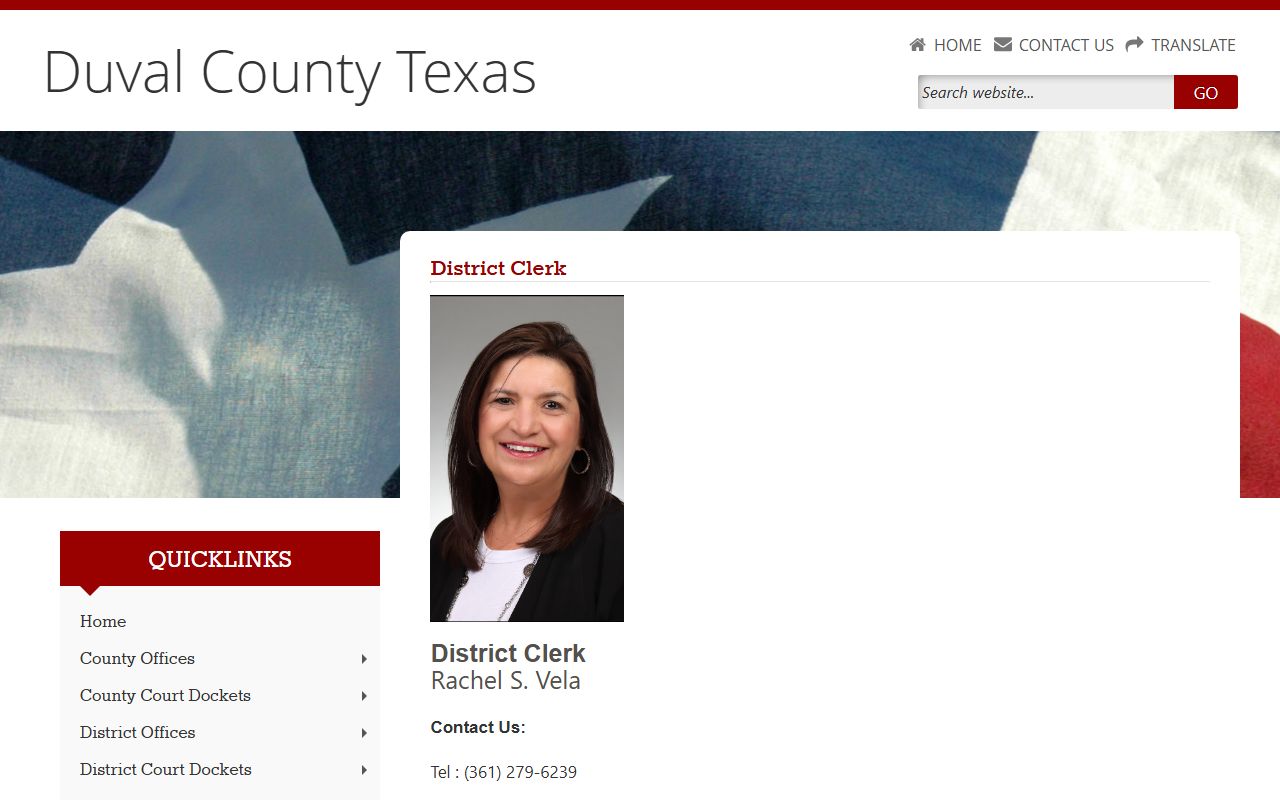
The District Clerk source matters because it connects the case-search service to the local office that can answer court-file questions.
Duval County Case Search Fields
The iDocket search interface was linked by the Duval County District Clerk, but static inspection did not expose every form option. The research supports a limited field table rather than a guessed full portal manual. Exact filters can change, so legal name spelling and cause number remain the best starting points for court records after a jail arrest.
| Field Label | Type | Required | Notes |
|---|---|---|---|
| County or court selection | Interactive dropdown or search | Required to narrow to Duval County | Exact static options were not captured, but the District Clerk links to iDocket. |
| Party or defendant name | Text | Depends on search mode | Use legal name and spelling variations. |
| Case or cause number | Text | No, if name search is available | Best for exact matching after magistration or court paperwork. |
| Date range or case type | Interactive filters | Optional if exposed | Exact options were not captured from the static page. |
Charges After a Duval County Arrest
Booking charges and filed charges can differ. The arresting officer may list an alleged offense at intake, but the prosecutor decides what will be filed in court. Felony matters are tied to the 229th Judicial District Attorney. The county page names G. Allen Ramirez as District Attorney. Misdemeanor prosecution is tied to the County Attorney, whose page names Baldemar Gutierrez and says the office represents the state in misdemeanor criminal cases in county court.
| Document | Who Uses It | What It Means |
|---|---|---|
| Complaint | Officer or prosecutor | A sworn charging document often used near the beginning of a misdemeanor or felony process. |
| Information | Prosecutor | A prosecutor-filed charging instrument used for many non-indicted criminal cases. |
| Indictment | Grand jury | A felony charging instrument returned by a grand jury. |
Duval County Charge Status Terms
Court records after an arrest can change as prosecutors review reports, witnesses, lab results, prior history, and legal issues. A case may be filed as one charge and later amended, reduced, enhanced, dismissed, or superseded by another charging document. The jail booking label is only the custody starting point. The court docket controls the case status once the charge is filed.
| Status | What It Means |
|---|---|
| Pending | The case has been filed and has not reached a final disposition. |
| Filed | The prosecutor or court has opened a formal charge in the case record. |
| Amended | The charge language, level, or details changed after filing. |
| Reduced | The filed charge was lowered to a lesser offense. |
| Dismissed | The charge ended without a conviction on that count. |
| Indicted | A grand jury returned a felony charging instrument. |
Bond Records After Arrest
Texas bail is governed by Code of Criminal Procedure Chapter 17. In Duval County, the Justice of the Peace page is important because it says JPs conduct bail examinations, magistrations, probable-cause determinations, and warrant duties. Bond may be set after magistration, but a hold can still block release. The county did not publish an adult jail bond desk page, payment list, bond-posting hours, or online bond payment link in the official sources inspected.
| Bond or Hold Type | How It Works |
|---|---|
| Cash bond | Money paid directly according to local court or jail procedure to secure appearance. |
| Surety bond | A licensed bondsman or surety posts the bond and charges a fee. |
| Personal bond or PR bond | Release on promise to appear, sometimes with supervision or conditions. |
| No-bond status | The person is not releasable on a standard posted amount at that stage. |
| Detainer or hold | Another agency, parole matter, warrant, ICE issue, federal case, or county case may prevent release. |
Note: Call the sheriff or the court before trying to post bond, because the official sources did not publish accepted payment methods.
Warrants and JP Court Records
No official searchable active warrant database for Duval County was located on the county or sheriff pages. The sheriff's Most Wanted page exists, but no active listed entries were visible during inspection. For warrant-related court records after a jail arrest, the Duval County Justice of the Peace page supplies the best local framework. It states that JPs may issue search or arrest warrants, determine probable cause, review search warrants, conduct bail examinations, and conduct magistrations.
The county lists four JP courts: Precinct 1 Judge Geraldita Martinez and Precinct 2 Judge Annabel C. Canales in San Diego, Precinct 3 Judge Aida C. Estraca in Benavides, and Precinct 4 Judge Linda Garza-Moncada in Freer. A Class C, traffic, capias, or lower-court matter may require the precinct court rather than the sheriff's office alone.
Charges vs Convictions
An arrest and a charge are not convictions. A charge is an accusation filed in court after an arrest, while a conviction requires a guilty plea, verdict, or other final finding. The distinction matters when reading Duval County court records after a jail arrest, because the public may see a booking label or filed count before the prosecutor has proved anything in court.
| Point | Charge | Conviction |
|---|---|---|
| Stage | Accusation after arrest or filing. | Final result after plea, verdict, or finding. |
| Meaning | Alleged conduct that must still be resolved. | Legal finding of guilt or accepted plea. |
| Where found | Booking record, complaint, information, indictment, or docket. | Judgment, sentence, DPS conviction history, or court disposition. |
Sealed and Expunged Arrest Records
Texas expunction is governed by Code of Criminal Procedure Chapter 55. The Duval County District Clerk page is locally useful because it publishes an expunction agency-contact list connected to SB 1667. The listed agencies include the District Clerk, County Clerk, District Attorney, Sheriff's Office, Probation, DPS, TDCJ, and Office of Court Administration. A person seeking cleanup after a dismissal, acquittal, identity error, or qualifying outcome should rely on a court order, not a website removal request.
| Point | Sealed or Nondisclosed | Expunged |
|---|---|---|
| Public visibility | Restricted from many public disclosures, but not destroyed. | Removed or destroyed under the court order's terms. |
| Government access | Some agencies may keep limited access under Texas law. | Access is much more limited and governed by the expunction order. |
| Best local source | Court clerk or attorney review of eligibility. | District Clerk process and agency-contact list after the order. |
Restricted Duval County Arrest Court Records
Some court records after an arrest may be sealed, restricted, redacted, or unavailable online. Juvenile proceedings have stronger privacy rules. Active investigations may affect release of law-enforcement information under the Public Information Act. Victim, witness, medical, mental-health, protected personal, and security-sensitive details may be withheld. A missing online result does not always mean no arrest or no case exists; it may mean the record sits with a different court, has not been filed yet, is restricted, or needs a clerk request.
Important: Duval County court data should not be used for FCRA-covered screening unless obtained through a compliant consumer-reporting process.
Public Record Search
Sponsored Results